MOVE ME EGYPT SERVICES
Corporate relocation in Egypt: office movers for Cairo and beyond
Moving a head office or several branches is an operational plan, not just an address change. We review the inventory by department, the handover sequence and the person responsible at each location. Each phase needs a clear scope and acceptance point before moving starts.
A coordination project across people and sites
The request may concern one department, several premises or company assets alongside employee moves. Define whether the requirement is physical furniture and equipment transport or coordination across phases and addresses. Immigration, accommodation, recruitment and legal services are not implied by the phrase corporate relocation.
Appoint one decision-maker and one controlled asset register. Each site needs access and receiving contacts, while departments need priorities and readiness dates. Share only personal information necessary to arrange the work. Asset and destination codes are often more suitable on transport labels than employee details.
Build a reviewable approval and handover plan
Link inventory to room plans, technical shutdown, loading, receipt and testing. A change in headcount is not a reliable automatic change in furniture volume: update the item list itself. Archives, devices, safes and stock have different handling and custody boundaries.
The quotation should identify phases, sites, exclusions and approval of additions. Delivery does not establish business readiness; IT, suppliers and building management have their own tasks. After each phase, reconcile identifiers and keep one snagging list with owners instead of scattered calls that are difficult to track.
Weekend and phased moves that keep Monday intact
The measure of an office move is not how fast the trucks run; it is whether your team opens their laptops on Monday and simply works. That outcome is built weeks earlier, when we agree with your management which of three shapes the move takes. A single-weekend move suits smaller offices: packing closes Friday evening, transport runs Saturday, workstations are live-tested Sunday, and the only thing your people notice is a new address in their calendars. A phased move suits larger teams: departments travel in waves, usually support functions first and client-facing teams last, so the company never goes fully dark. And a parallel-running move, where the new site is commissioned before the old one is released, suits operations that cannot pause at all, with dual readiness costs we state honestly at the survey.
Whichever shape you choose, the mechanics are the same discipline. Every crate and workstation carries a destination code matched to a floor plan your team approved, so unloading is placement, not searching. The first items off the truck are the ones Monday needs most: the comms cabinet, the reception bench, the coffee machine, and the marked priority crates each department nominated in advance. Our crew chief walks the new floor with your office manager at handover and signs the placement against the plan, department by department. What this buys you is boring and priceless: no Monday morning spent hunting for the finance archive box, no first week working off folding tables, and no explaining to clients why the phones went quiet.
Office IT, the comms cabinet and the first hour online
In most offices the technology is small in volume and enormous in consequence. A comms cabinet holding the router, the switch, the PBX and a few terabytes of local storage is the difference between a moved company and a stopped one, so it gets its own protocol inside your move plan. The sequence starts before anything is touched: your IT contact confirms backups, photographs every port and cable, and labels both ends of every connection. Only then do we power down in the agreed order, pack each device in anti-static protection with its cables bagged and married to it, and load the cabinet last so it lands first. At the new site it is the first thing installed, because every other team is waiting on it.
Workstations follow the same logic at scale. Monitors travel upright and screen-protected, docks and chargers are bagged per desk, and each desk kit is coded to the same destination label as the crate above it, so a returning employee finds a complete kit, not a scavenger hunt. Where your own IT staff handles reconnection, we stage and they cable; where you ask us to place and connect, our crew works from the labeled diagram and your IT signs off the first row before the rest proceed. Printers, plotters and meeting-room screens each get their handling note at the survey, because they are the machines everyone forgets and everyone needs on day one. The principle underneath all of it is simple: technology is not cargo, it is the company's nervous system, and a corporate move is judged by how calmly it comes back online.
The people side of a company move
A corporate relocation succeeds twice: once in the building, and once in the heads of the people who work there. Employees who hear about the move early, with a clear date, a new commute picture and a named person to ask, arrive at the new site ready; employees who hear rumors arrive resistant. We encourage every client to appoint an internal move champion per department, and we equip them properly: a one-page timeline, packing instructions in plain language, the floor plan with each team's zone marked, and a direct line to our coordinator for the questions that always come. When your people feel informed, they pack their desks on time, label honestly, and the whole schedule stops slipping.
For staff who relocate themselves, the support is more personal. An employee moving from Cairo to a new city assignment, or an international hire arriving for the first time, needs more than a truck: they need their household moved with the same care as the office, timed to their start date, plus the practical pointers a new city demands. We run those household legs through the same crews and the same standards as our residential work, coordinated under your company account so HR has one contact and one report instead of twenty small favors. The principle holds everywhere in a corporate move: the furniture can be perfect and the move still fails if the people feel handled. Treat the people as passengers with a say, not cargo with legs, and the move lands the way leadership hoped when they approved it.
Desks, systems furniture and the tagging that saves a week
A modern office is not a pile of furniture; it is a system. Bench desks share legs and cable trays, storage walls come apart in a specific order, and meeting tables have exactly one way their frames fold without bending. Moved carelessly, systems furniture arrives as expensive puzzle pieces with missing fasteners and no map. Moved properly, it arrives as a kit. Our crews disassemble against the manufacturer's logic, photograph each bay before it comes apart, and bag every screw, bracket and cam into a labeled hardware pouch that travels taped to the panel it belongs to. Nothing goes into a communal fastener box, because the communal fastener box is where Monday mornings go to die.
The tagging system is the other half. Every desk, pedestal, chair and screen gets a destination code before it moves: building, floor, zone, seat number, matched to the plan your office manager approved. Reassembly at the new site is then placement against that plan, not interpretation. Where the new layout changes the configuration, shorter benches, split teams, a different meeting ratio, we flag the parts that no longer fit at the survey, so you decide in advance what is reconfigured, what goes to storage and what is retired, rather than discovering it beside an open truck. The result is that reassembly day looks like the last hour of a well-run installation, not the first hour of a jigsaw competition, and your facilities team spends the week after the move on their actual jobs.
Buildings, elevators and the permissions nobody mentions
Office moves in Cairo are decided as much by buildings as by trucks. Every business tower has its own rules: which elevator may carry furniture, in what hours loading bays are open, whether work is allowed on Fridays, how large a deposit the building management holds against damage, and how many days of notice the security office wants before a crew arrives. In New Cairo, the Fifth Settlement, Smart Village, Maadi's office strip and the downtown towers, these rules differ building by building, and they are rarely written in the lease. We collect them at the survey, in writing, from both buildings, because a move plan that ignores them fails at the loading dock, in front of your staff, on the most visible day of the project.
The practical consequences shape the schedule. Service elevators are booked like meetings, with a confirmed slot and a named contact, and the plan carries a fallback slot because buildings bump bookings. Elevator interiors and lobby floors are protected before the first crate moves, which is what gets your deposit back and keeps the building manager friendly. Where the elevator cannot take a piece, a boardroom table, a safe, a copier that grew, we plan the alternative at survey time: stair carry with extra hands, or an external lift through a window or balcony where the building permits it. Permits for the truck itself, parking, curb space, sometimes a police note for a busy street, are filed days ahead. None of this is glamorous, and all of it is the difference between a move that flows and a move that argues at the door.
Confidential files, archives and chain of custody
Almost every office holds paper it cannot lose: contracts, personnel files, financial archives, client records, sometimes sealed or regulated material. A corporate move treats that paper differently from everything else. Confidential material is packed by your own nominated staff or under their direct observation, into numbered crates that we seal in front of your representative. The seal numbers are recorded on the move manifest, the crates travel together in a designated part of the vehicle, and at the new site they are opened by your people, who verify the seals before they break them. What travels sealed arrives accountable: every handoff is signed, and there is never a moment when the archive is simply around.
The same discipline extends to what should not move at all. A relocation is the natural moment for a records review, and we encourage clients to run one: files past their retention date can be shredded before the move, which cuts volume and cost, and we can arrange certified destruction with a receipt for your compliance file. Active archives that are only touched once a year can go to our storage instead of premium office shelving, which often pays for the move logistics by itself. And digital media, backup drives, old laptops, decommissioned servers, get the same sealed treatment as paper, because a hard drive in an open box is a data incident waiting for a name. Confidentiality in a move is not a mood; it is a procedure, and ours is written, numbered and signed at every step.
When the leases do not meet: storage as a bridge
Office leases almost never end and begin on the same day. The fit-out runs late, the old landlord wants the space back early, or the negotiation lands a month apart, and suddenly your company has furniture with nowhere to sit. This is normal, and it is exactly what our storage exists for. The move then runs in two legs: everything travels to our warehouse, packed and inventoried as if it were traveling to the new office, and when the new site is ready, the second leg delivers against the same destination codes, so the final placement loses nothing to the pause. You pay for the storage period and the extra handling honestly stated, not for a crisis.
A storage bridge also creates an opportunity worth taking. With everything in one place and no deadline pressure, the inventory decisions become easy: the archive boxes nobody has opened in three years can stay in storage instead of occupying new-office square meters, redundant furniture can be sold or retired while it is already off the floor, and the fit-out team can receive items in the order they need them, meeting rooms last, workstations first, rather than all at once. We keep the inventory list live through the whole period, so a single needed item, the board minutes book, the spare server, the good chairs, can be pulled and delivered mid-storage without unpacking the company. The gap between leases stops being dead time and becomes the cheapest reorganization you will ever run.
What drives the price of a corporate move
Corporate moves are priced by survey, not by a rate card, because no two offices are the same shape. The honest drivers are these. Volume first: how many workstations, meeting rooms, storage walls and archive meters actually travel, measured at the walkthrough rather than guessed from headcount. Access second: a fifth-floor office with a booked service elevator costs differently from a ground floor with a loading dock, and a site needing an external lift or night work costs differently again. Distance third, though inside Greater Cairo it matters less than people expect. Then the shape of the move: a single weekend costs more per hour than a phased month, because it concentrates crews, and parallel running costs most of all because it holds two sites ready at once.
The quote you receive from us itemizes all of this, so you can see what each decision costs before you make it. Packing service is priced separately from transport, because some clients pack their own files and want only the heavy work; storage, if needed, appears as a weekly figure with the handling legs; and IT handling, crates, seals and any external lifting are line items, not surprises. What is not in our quotes is equally deliberate: no vague miscellaneous lines, no surcharges that appear after the truck is loaded, and no charge for the survey itself. When you compare movers, compare the itemization, not the headline number; the cheapest headline is usually the one missing the second floor of detail, and the correction always arrives at the worst moment, with your office already in boxes.
What move day actually looks like
Clients who have never watched a corporate move expect chaos; what they should see is choreography. The crew arrives at the agreed hour with the move plan printed, the floor plan posted at each elevator, and the crew chief introduced to your office manager before the first crate is touched. Packing zones are marked, priority items are confirmed once more against the list, and the first hour looks slow because it is spent setting up the protection, the labels and the staging lanes that make every following hour fast. By mid-morning the rhythm is visible: packed crates flow to the elevator in one direction, empty ones return in the other, and the manifest ticks off line by line.
At the new site the mirror image runs. The receiving crew has the same plan and the same codes, so placement starts the moment the first truck opens. Your office manager and our crew chief walk each zone as it completes, furniture placed, crates stacked to their marks, IT staged for your technicians, and anything out of place is fixed on the spot rather than listed for later. The day ends with a signed handover: what was moved, what was placed, the two or three honest exceptions if any exist, and the date we return to collect the empty crates. The whole experience should feel like watching a competent crew do something they have done a hundred times, because that is exactly what it is, and the boredom of a smooth move day is the product you actually bought.
From first walkthrough to signed handover
A corporate move has a shape you can put on one page, and we give you that page at the survey. Week one is the walkthrough: we measure volume, test access, collect both buildings' rules, and sit with your office manager and IT to learn what is fragile, what is confidential and what cannot be down for an hour. Week two is the plan: destination codes, the move shape, the building bookings, the crate and label drop, and the packing schedule your department champions will follow. Week three is preparation: your teams pack personal desks and files, we pack everything else, IT runs its backup and labeling protocol, and the manifest is frozen two working days before the trucks. Then the move itself, then handover, then the crate collection visit a week later, and the file closes with a single signed sheet both sides keep.
Two things make this timeline hold. The first is that every date in it has an owner and a fallback, so a slipped fit-out or a bumped elevator booking moves a milestone instead of collapsing it. The second is that nothing on the page is aspirational: if your fit-out needs six weeks, the plan says six weeks, and we would rather lose the job of pretending than have you discover the truth beside a loaded truck. Clients regularly tell us the plan was the first moment the relocation felt manageable. That is the point of it. A move is a hundred small promises, and a written timeline is how you watch every one of them being kept.
Insurance and liability, in plain terms
Every corporate client asks about insurance, and every honest answer starts with the same sentence: prevention is the policy that pays every time. Our packing standards, hardware pouches, destination codes and sealed-crate procedures exist so that the insurance question stays theoretical. But assets deserve a real answer, not a proverb, so here is ours. Your move is covered by our goods-in-transit insurance for the replacement value declared on the manifest, and the cover is stated in the quote in writing, not mentioned in passing. High-value items, artwork, safes, specialized equipment, are declared individually at the survey so their cover matches their worth rather than a general rate.
The liability side matters just as much to a company. Damage to the buildings, a scratched lobby floor, a dented elevator, a chipped doorframe, is the classic source of disputes between tenants and building management, which is why our protection routine photographs both sites before work begins and our crews leave the common areas as they found them. If something does go wrong, the procedure is as important as the promise: it is reported the same day, photographed, written into the handover sheet, and settled against the declared value, not negotiated for weeks. A mover's real insurance posture is visible in how they talk about it before you sign. Vague reassurance is the tell of a company that has never settled a claim properly; specific numbers and a written procedure are the tell of one that has.
Multi-site companies and moves between cities
Companies with several sites rarely move everything at once; they consolidate, expand, or reshuffle teams between branches. These projects look like several small moves but behave like one large one, because the pieces interlock: the archive leaving the Nasr City office is joining the Alexandria branch, the surplus desks from the downsized floor are filling the new Sixth of October site, and everything must land in the right city in the right week. We run these as a single program with one coordinator and one manifest split by destination, so each branch receives exactly what its plan says, and your management sees one consolidated report instead of four partial stories.
Between governorates the logistics change character. Long-haul legs are scheduled around road windows and arrival access at the receiving city, crews that packed in Cairo can ride with the load to place in Alexandria, and overnight staging is planned where a same-day round trip would rush the unloading into the dark hours. The same standards travel with the trucks: sealed confidential crates, destination-coded furniture, photographed condition at both ends. Whether your sites are across Cairo or across Egypt, the principle does not change: one plan, one accountable coordinator, and every branch manager signing for exactly what arrived, in the condition the manifest recorded when it left.
Crates, labels and the materials we bring
A corporate move runs on plastic crates, not cardboard. Cardboard collapses under stacking weight, drinks moisture and dies after one trip; the lidded moving crate stacks five high, seals with a tamper tag and shrugs off a wet loading dock. We deliver the crate allotment to your office about a week before the move, in the quantity the survey counted, with the label stock, the tamper seals, the bubble and paper for the kitchen and the glass cabinet, and the anti-static bags for anything electronic. Your teams pack their own desks and personal files, which is faster, more private and kinder to the budget, while our crew handles the shared areas, the furniture, the IT and everything heavy or fragile.
The label discipline matters more than the crate. Every label carries the destination code and the owner's department, and every department gets its own color, so a glance across a stacked truck tells you where everything lives. The labels we supply are pre-printed with the zone names from your approved floor plan, because handwritten floor-3-west becomes floor-3-east at the worst moment. After the move we collect the crates on the agreed date, which is quietly one of the most appreciated parts of the service: no mountain of dead cardboard in your new lobby, no arguing about disposal, and a gentle forcing function that gets every desk fully unpacked within the week instead of living out of boxes until someone complains.
The week after: settling in without the hangover
The move is not finished when the last truck leaves; it is finished a week later, when the snagging list is empty. Every corporate move produces a handful of small discoveries: a desk that wants its modesty panel reversed for the new layout, a shelf that needs one more bracket, a chair that developed a squeak in transit, two crates that landed in the right zone but the wrong corner. These are normal, and the difference between a good mover and a frustrating one is what happens next. Our handover includes a scheduled snagging visit in the first week: one of the move crew returns with the manifest, walks the floor with your office manager, fixes what can be fixed on the spot and schedules the rest with a date, not a promise.
The same visit collects the empty crates, takes away the protection materials and the packing debris, and closes the manifest with the final signed sheet. It is also the moment for the honest retrospective: what went exactly to plan, what we would sequence differently, and what your team told us in the corridors. Clients renewing for their next site, or recommending us to the company upstairs, almost always mention this week rather than the move day itself, because anyone can look good on the day with enough adrenaline; the week after is where you find out whether the plan was real. We treat that week as part of the job, priced into the quote, scheduled before the trucks ever load, and reported on when it closes.
Why companies move with MOVE ME EGYPT
Companies choose us for the same reason they choose any supplier they keep: the thing promised is the thing delivered. In practice that looks like a surveyor who measures instead of guessing, a written plan instead of a verbal one, itemized pricing instead of a headline number, crews who have moved offices together for years rather than a crew assembled that morning, and a coordinator whose phone is answered during the move, not just before the contract. It also looks like restraint. We do not promise dates we cannot hold, we do not quote below cost to win and recover it on move day, and we do not treat your office as a training ground for new hands.
Under the MOVE ME EGYPT and INEX LOGISTIC umbrella we run corporate relocations across Greater Cairo and between Egyptian governorates, from ten-person startups changing neighborhoods to multi-floor programs between cities. The same company that moves a family home with care moves your workplace with discipline, because the standards are one set, not two: protection first, codes on everything, signatures at every handoff, and a signed close when the work is truly done. If your management needs references, the survey includes them; if your procurement needs paperwork, the quote arrives with the insurance and liability terms written out. And if all you need right now is an honest number for a move you are still thinking about, the survey costs you nothing but an hour, and the number is one you can plan against.
Small offices and startups: the same discipline, scaled
A twelve-person studio moving from Maadi to New Cairo does not need a relocation program; it needs a competent Saturday. We scale the corporate process down instead of skipping it, because the things that break small-office moves are the same things that break big ones, just faster. The survey is a thirty-minute walkthrough rather than a half-day audit, but it still happens, and it still produces a written plan: which desks and how many crates, whether the elevator needs booking, what the comms corner contains, and who on your side answers questions on the day. The quote is still itemized, the crates still arrive a few days early with labels, and the crew chief still signs a handover sheet with you at the new door. What shrinks is the duration and the cost, never the discipline.
For a young company, two things matter more than anything: cash and momentum. On cash, a small office move is usually a single-vehicle job with one crew, and we say so plainly at the survey rather than inflating the scope; a startup does not need three trucks and a project manager, and we will never sell it them. On momentum, the weekend shape is almost always right for teams under twenty people: pack Friday after work, move Saturday, test Sunday, work Monday, with the team unpacking its own crates on the first morning, which is free labor and free team-building in one. And when the company grows into its next move, the one with departments and a board that wants paperwork, the same surveyor answers the phone, already knowing your name, your standards and your history. That continuity is worth more to a growing company than any single discount.
The questions leadership asks before approving
Before a corporate move is approved, someone senior asks hard questions, and the quality of the answers decides whether the project starts smoothly or starts with doubt. How long will we be down? The honest answer is a number of hours for your specific shape, worked out at the survey, with the weekend and phased options priced so leadership can choose its pain threshold. What happens if something breaks? The insurance terms, in writing, with the claims procedure, the declared values and the same-day reporting rule. Who is actually in charge on the day? A named crew chief and a named coordinator, both of whose phone numbers are on the plan. What will it really cost? The itemized quote, valid for a stated period, with the two or three things that could change it written next to the total.
There is one more question, usually asked quietly by the person who will be blamed if the move fails: have you done this before, for someone like us? The answer is the reference list and, more usefully, the survey itself, because ninety minutes of watching a surveyor measure, ask the right questions about your server room and your lease dates, and produce a plan on the spot tells a leadership team more than any sales deck. We welcome these questions, early and sharply. A client who interrogates the plan before signing is the client who enjoys the move; the plan survives the interrogation because it was written to be true, not to be pretty, and truth is the only thing that holds up on a loading dock at seven in the morning.
Plants, art, water dispensers and the things nobody lists
Every office inventory misses the same category: the things that are not quite furniture and not quite equipment. The rubber plant that has been growing by the window since the company was founded, the framed prints in the corridor, the founder's awards shelf, the water dispensers, the coffee machine that is technically leased, the prayer room furnishings, the whiteboard walls that do not move at all, and the aquarium in reception that someone always forgets until move week. None of these fit a line item, and all of them need a decision. At the survey we walk for exactly these things and write a note for each: what travels, how it is packed, and who owns the decision if it does not.
The practical answers are simpler than they look. Plants travel open in the truck, watered lightly two days before, never the morning of the move, and they are the first things placed near windows at the new site; a large office jungle can travel as its own load if the collection is serious. Framed art and glassboards are corner-protected, wrapped and carried flat in the furniture blankets, never crated with files. Water dispensers travel empty and upright, and the water contract company is told the new address the same week you tell us. The aquarium is the one item we decline to move as a tank with water and fish, and we say so at the survey: the fish travel with their owner in buckets, the tank travels drained and padded, and reassembly happens after everything else, when the room is calm. Small things, honestly handled, are what make the new office feel like yours on the first morning instead of a furnished space you are renting.
Restacks: moving floors without leaving the building
Not every corporate move involves a truck. Companies grow out of one floor into two, consolidate three floors back into one, or swap departments between levels, and these internal restacks carry the same risks as a cross-city move compressed into a weekend: the same systems furniture to disassemble and rebuild, the same comms equipment to migrate, the same confidential files to seal, and the same Monday morning deadline. The building adds its own rules, since most towers allow internal moves only outside working hours and only through the service elevator, with the same protection and deposit routine as an external move.
The advantage of a restack done properly is speed: with no transport leg, a single weekend absorbs what a road move spreads over days, and the new floor can be pre-labeled and pre-cabled while the old one still works. We plan restacks exactly like external moves, with the survey, the destination codes, the crate drop and the signed handover, because the discipline is what makes the speed safe rather than chaotic. And the morning after, when your team rides the elevator to a different button and finds their desks, their plants and their labeled crates waiting in the right corners, the change of floor reads as the upgrade it was meant to be rather than a disruption.
The final week, day by day
The last week before a corporate move has a rhythm that works everywhere. Monday: crates and labels are on site, department champions hold their ten-minute briefings, and the manifest is in its final draft. Wednesday: personal desks and files should be fully packed, the IT backup is confirmed in writing, and both buildings have the final confirmed elevator slots. Friday: the crew arrives for the shared areas, the comms cabinet protocol begins, and the move runs exactly as the plan says. Keeping this rhythm is the whole secret; nothing in it is clever, and everything in it is what makes Monday morning ordinary.
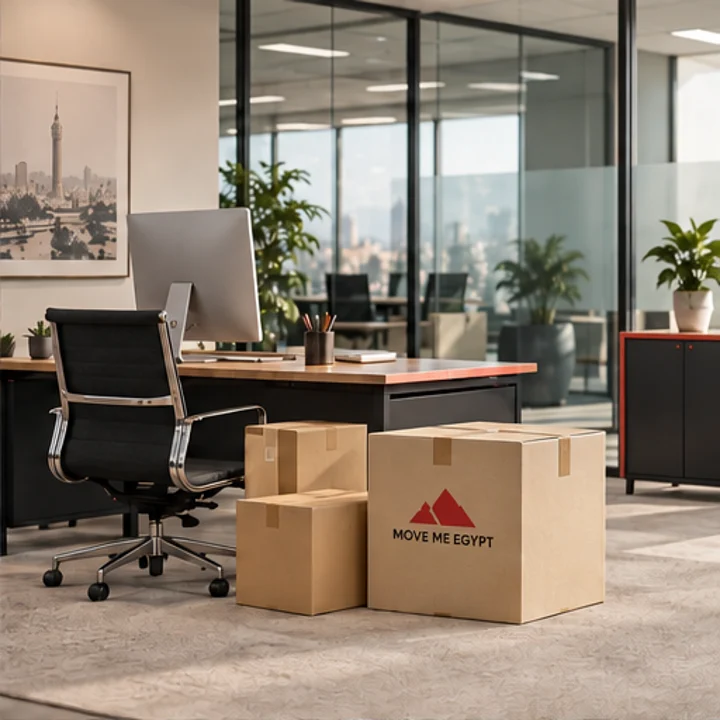
What needs to be agreed
Different departments may need different phases, subject to an agreed workable plan. Server equipment has a separate physical-moving scope. Changing the destination layout after loading may alter the work and must be reviewed rather than silently added to the original agreement.
Prepare these details
- List all branches, addresses and local contacts.
- Share department layouts and priority handover dates.
- Confirm access permits and loading restrictions.
- Assign responsibility for files, IT equipment and receiving checks.
How the move is planned
Share the inventory
Send the collection and delivery locations, preferred date and a clear inventory. Photos help us identify missing information, but they do not automatically replace a site survey.
Review access and the scope
We review entrances, stairs, lifts and loading points, then identify packing, dismantling, transport and any work requiring another specialist.
Agree the quote and responsibilities
Check the included and excluded work, stages, contacts and receiving arrangements. Changes to the inventory or address need review before they become part of the plan.
Prepare, move and hand over
The team follows the agreed scope, with labels and inventory checks at delivery. Record visible observations at handover and keep important personal items with you.
Locations and availability
We welcome moving requests from all of Greater Cairo: Nasr City, New Cairo, the Fifth Settlement, the New Administrative Capital, 6th of October City, Sheikh Zayed, Maadi, Zamalek, Katameya Heights, Katameya Golf and New Giza. Our service covers every governorate in Egypt: Alexandria, the North Coast, Ain Sokhna, Suez, Hurghada, Sharm El Sheikh, El Gouna and beyond. We have worked everywhere in Egypt, and our crew reaches any address with the same planning and commitment. Send your area on WhatsApp and we will confirm the details and timing right away.
Survey and pricing
A quote depends on the inventory, volume, item type, distance, access and agreed packing, handling and assembly. We review the details and survey needs before a final offer. The household calculator is a planning tool, not a binding quote; it does not price company, factory, server, safe or piano moves, or inventories with unknown-volume items. Ask for the exact inclusions and exclusions before agreeing the work.
Frequently asked questions
Does an enquiry confirm a booking?
No. The team must review the request and agree the scope, availability and quote before the move is confirmed.
Is every task included automatically?
No. Packing, dismantling, handling, storage and specialist work depend on the written scope. Check the exclusions as well as the price.
What if my inventory or address changes?
Tell us before the move. A change can affect access, timing, equipment and price, so it needs review before acceptance.